GEO: QUIET
4
A/B (quiet)
The sun is currently in a quiet state with geomagnetic conditions remaining at G0. While active regions are present on the disk, overall flare productivity is limited to minor C-class events.
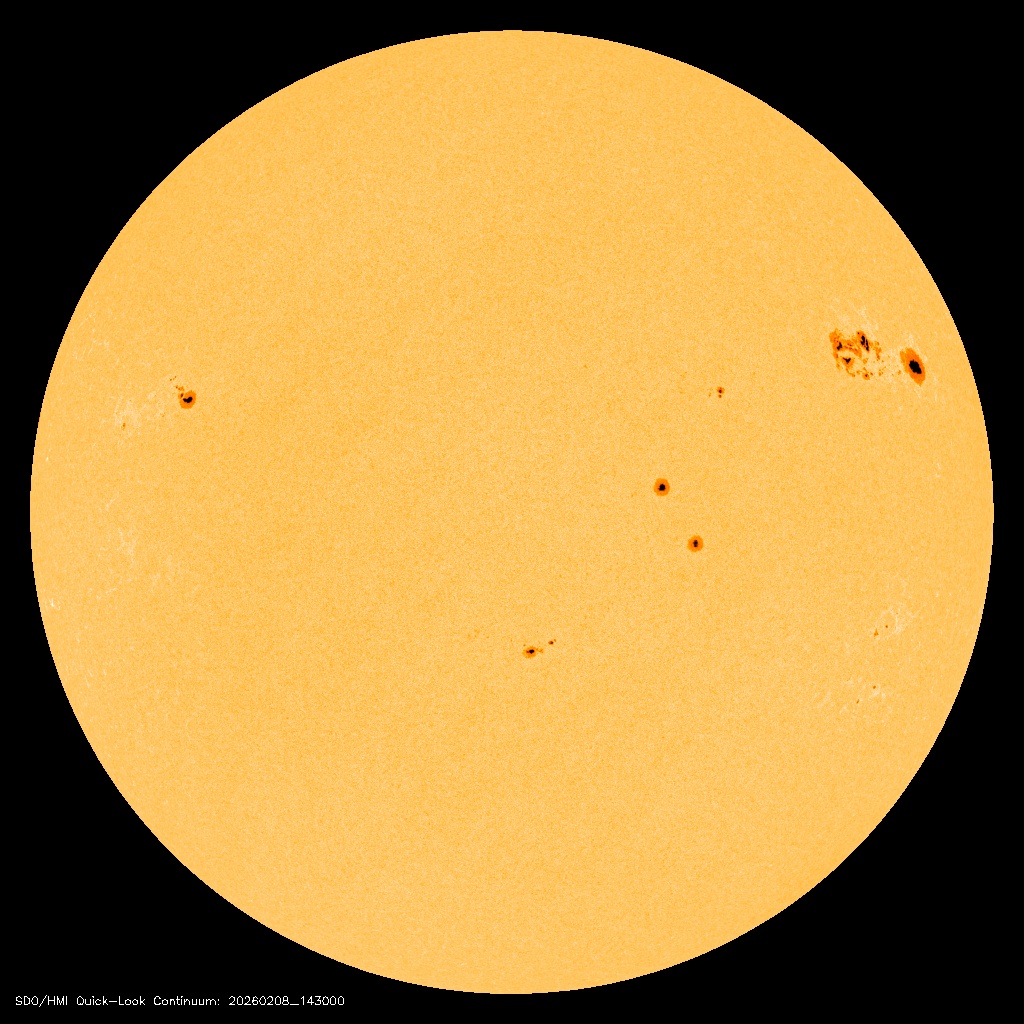
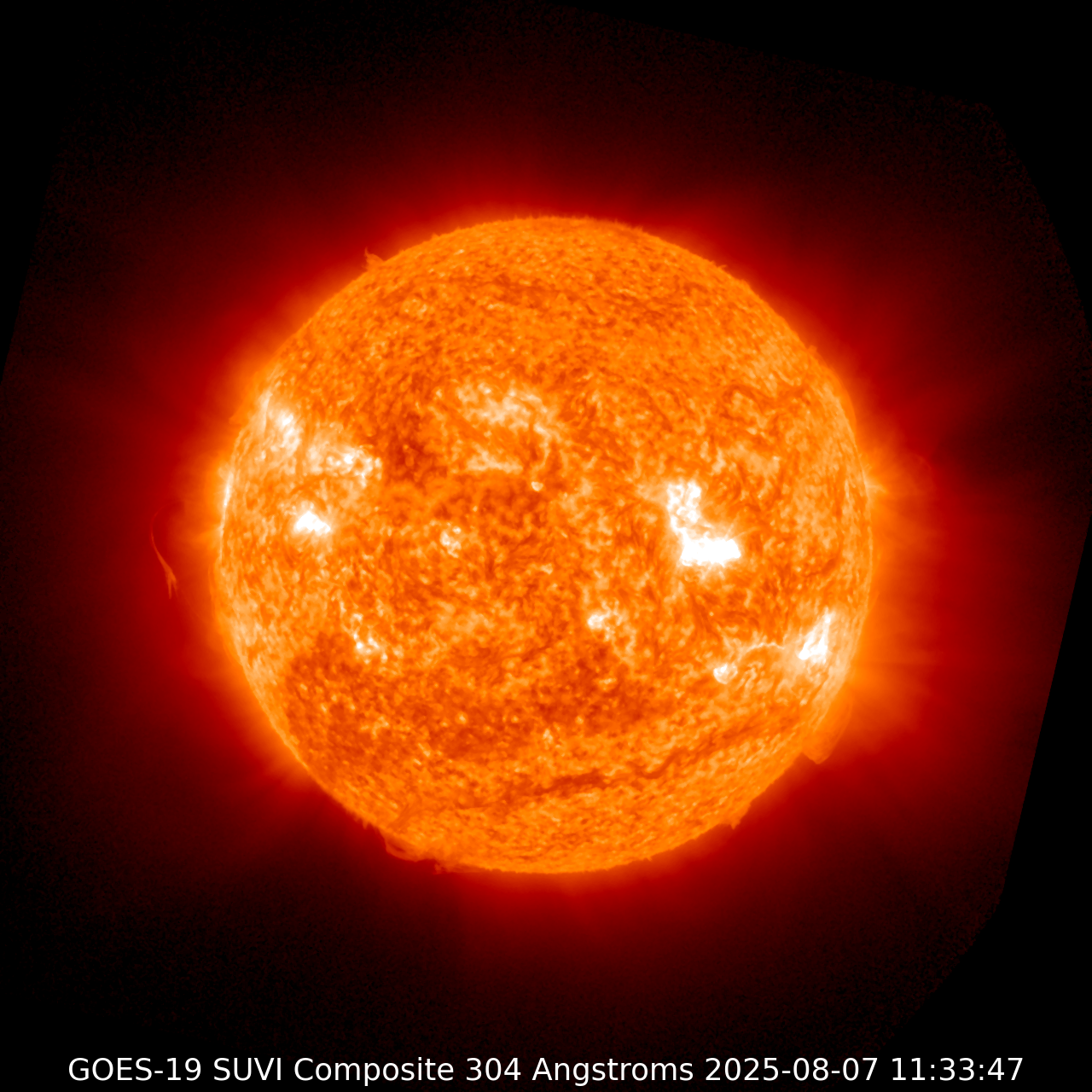
The planetary K-index is currently 2.0, indicating a stable and undisturbed geomagnetic field. The F10.7 solar radio flux is holding steady at 129 sfu, consistent with moderate solar activity levels. Satellite and radio communications are currently unaffected by solar emissions.
The current Kp-index of 2.0 confirms a lack of geomagnetic disturbance, meaning no impacts to satellite operations or power grids are anticipated.
Geomagnetic conditions are expected to remain quiet for the next 24 hours, with Kp indices likely to fluctuate between 1.5 and 2.5. Flare activity is expected to persist at low levels, with a 40% probability of isolated M-class flares from existing active regions.
Aurora activity is currently confined to high latitudes. Observers at mid-latitudes (40-60°N) are unlikely to see any display under these conditions.
| Region | Location | Class | Flares C/M/X |
|---|---|---|---|
| AR4468 | N10E39 | Cro/B | 0/0/0 |
| AR4463 | N17W55 | Hsx/A | 0/0/0 |
| AR4464 | S14W56 | Dao/B | 1/0/0 |
| AR4465 | N08W11 | Cai/B | 0/0/0 |
Monitor AR4464 as it rotates toward the western limb for any sudden increases in magnetic complexity that could trigger an M-class flare.