GEO: QUIET
4
A/B (quiet)
Geomagnetic conditions are currently quiet, with the Kp-index hovering at 1.7. Solar activity remains low, characterized by minor flare potential and steady radio flux levels.
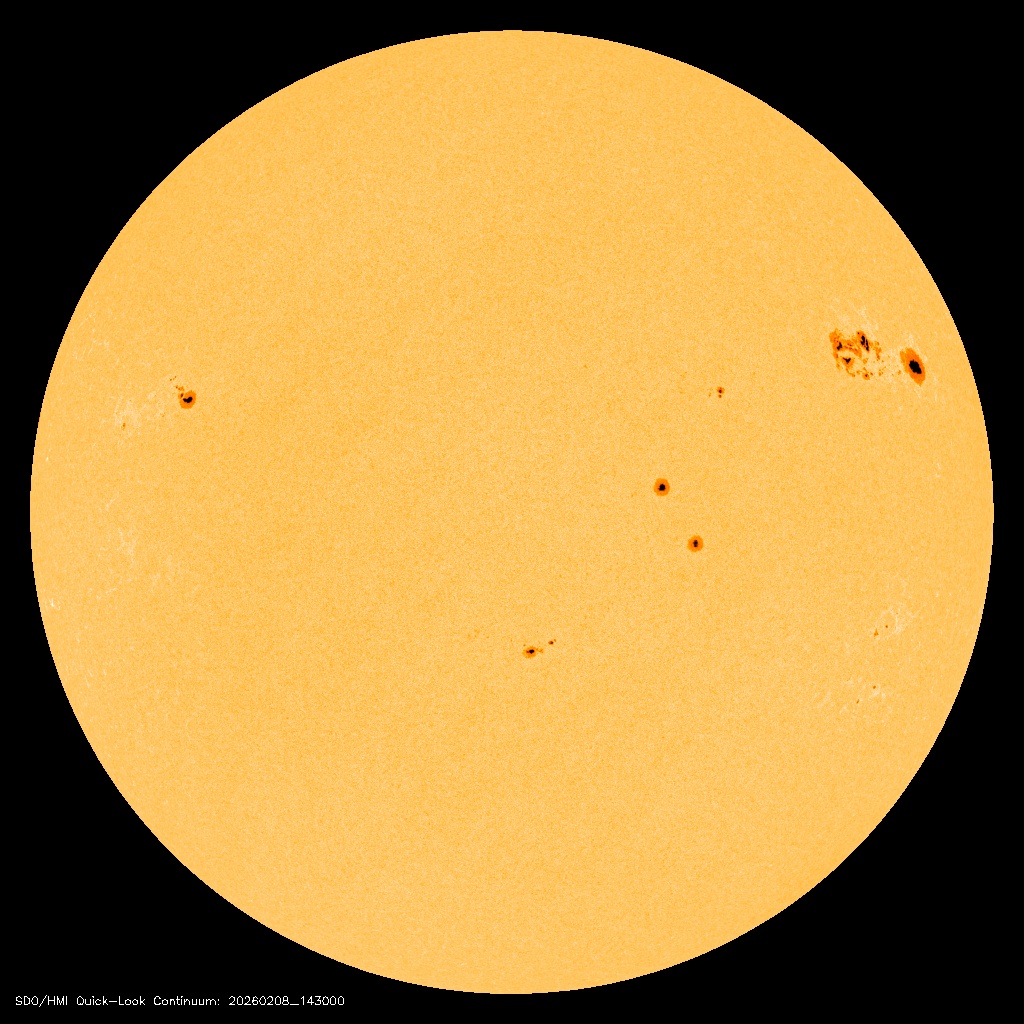
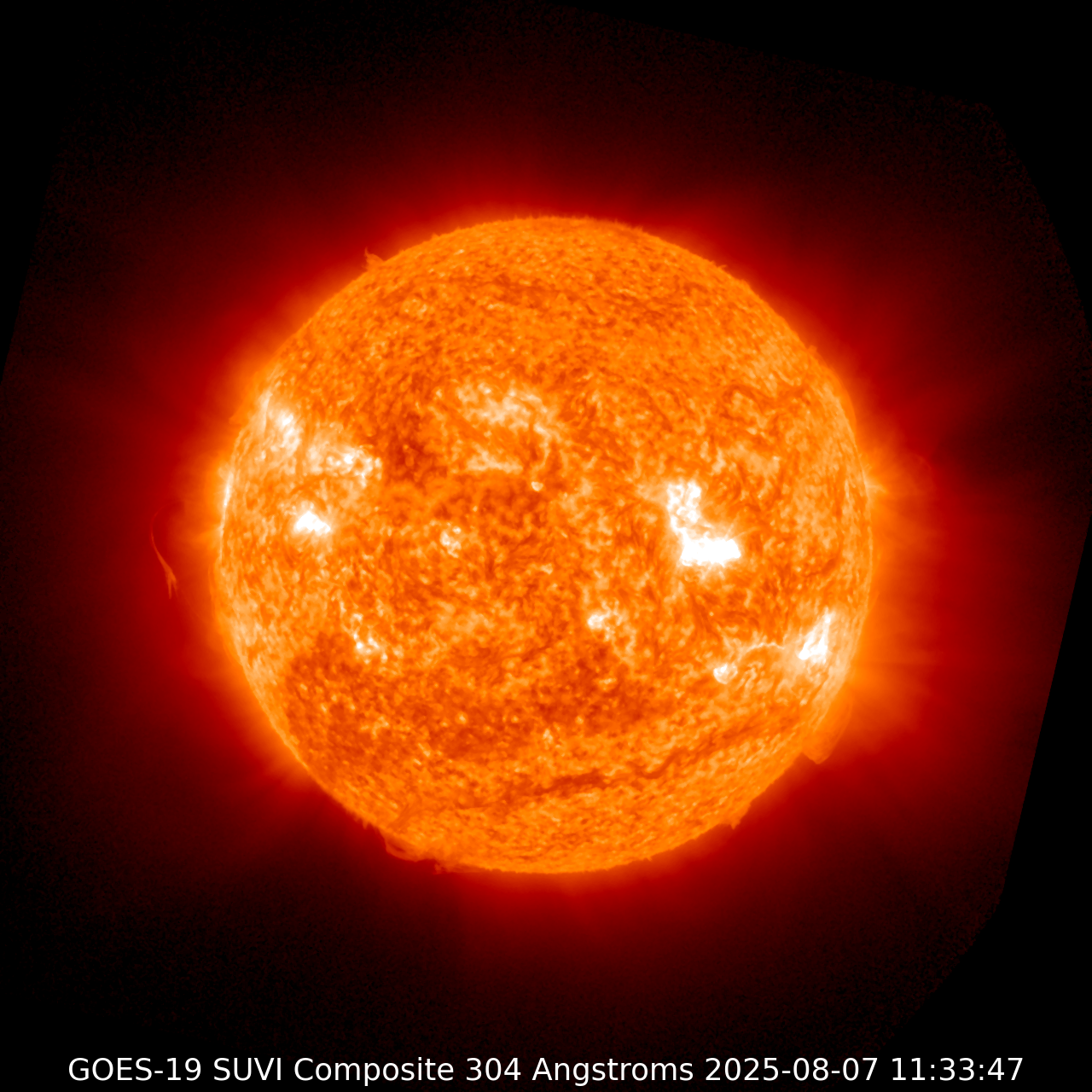
The Sun is currently in a quiet state, with eight active regions visible across the disk but none showing significant complexity. Solar radio flux is at a moderate 139 sfu, consistent with current solar cycle progression. The lack of significant X-ray flaring confirms a stable environment for satellite operations and radio communications.
The current Kp-index of 1.7 indicates a stable magnetosphere with minimal risk of disruption to power grids or navigation systems.
Geomagnetic activity is expected to remain quiet to unsettled, with the Kp-index peaking near 2.7 over the next 24 hours. No significant geomagnetic storms are anticipated as the solar wind environment remains benign.
Aurora activity will be limited to high-latitude regions. Observers at mid-latitudes should not expect visibility during this period.
| Region | Location | Class | Flares C/M/X |
|---|---|---|---|
| AR4468 | N10E39 | Cro/B | 0/0/0 |
| AR4465 | N08W11 | Cao/B | 0/0/0 |
| AR4464 | S14W56 | Dao/B | 0/0/0 |
| AR4463 | N17W55 | Hsx/A | 0/0/0 |
Monitor the magnetic evolution of AR4468 as it rotates further into the Earth-facing solar disk for potential increases in flare complexity.