GEO: QUIET
5
A/B (quiet)
Current solar activity is characterized by a moderate F10.7 flux of 122 sfu and stable, quiet geomagnetic conditions. While minor fluctuations in the K-index are expected today, no significant storming is currently underway.
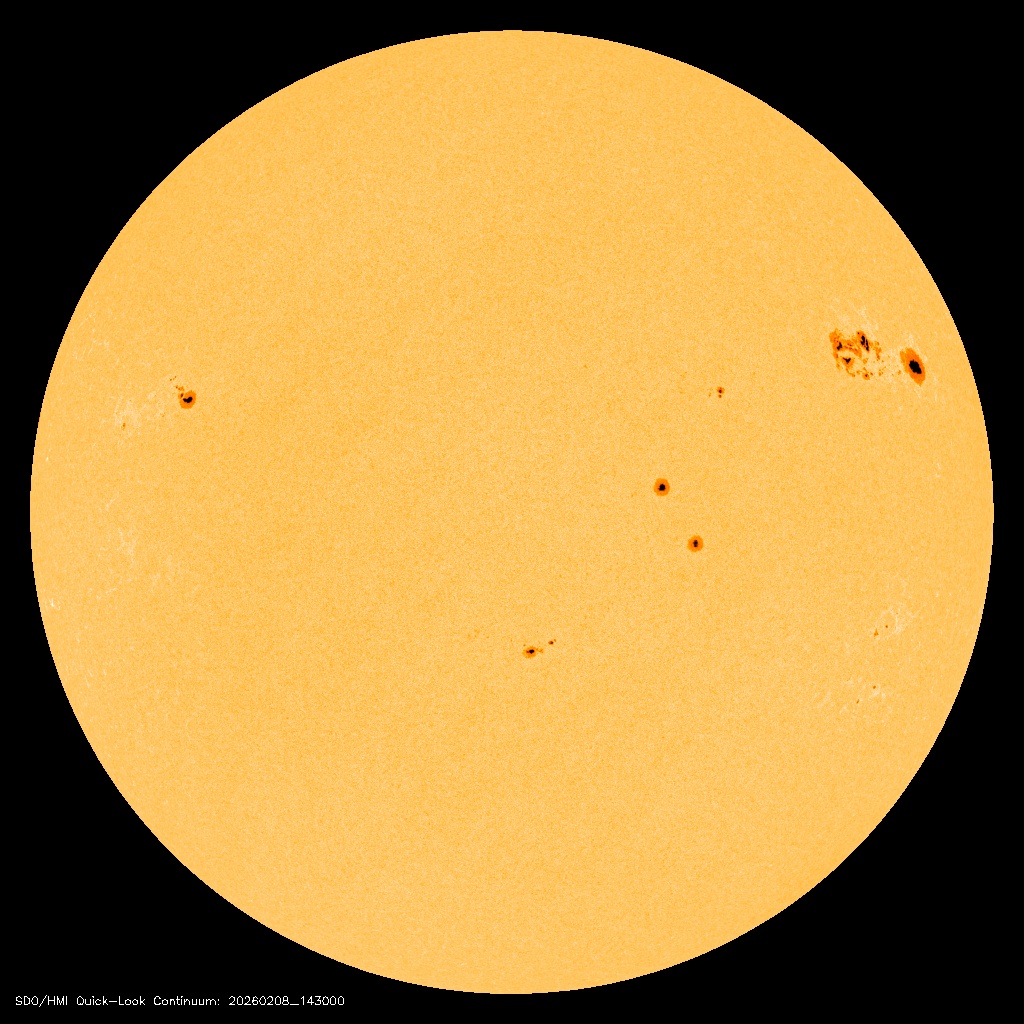
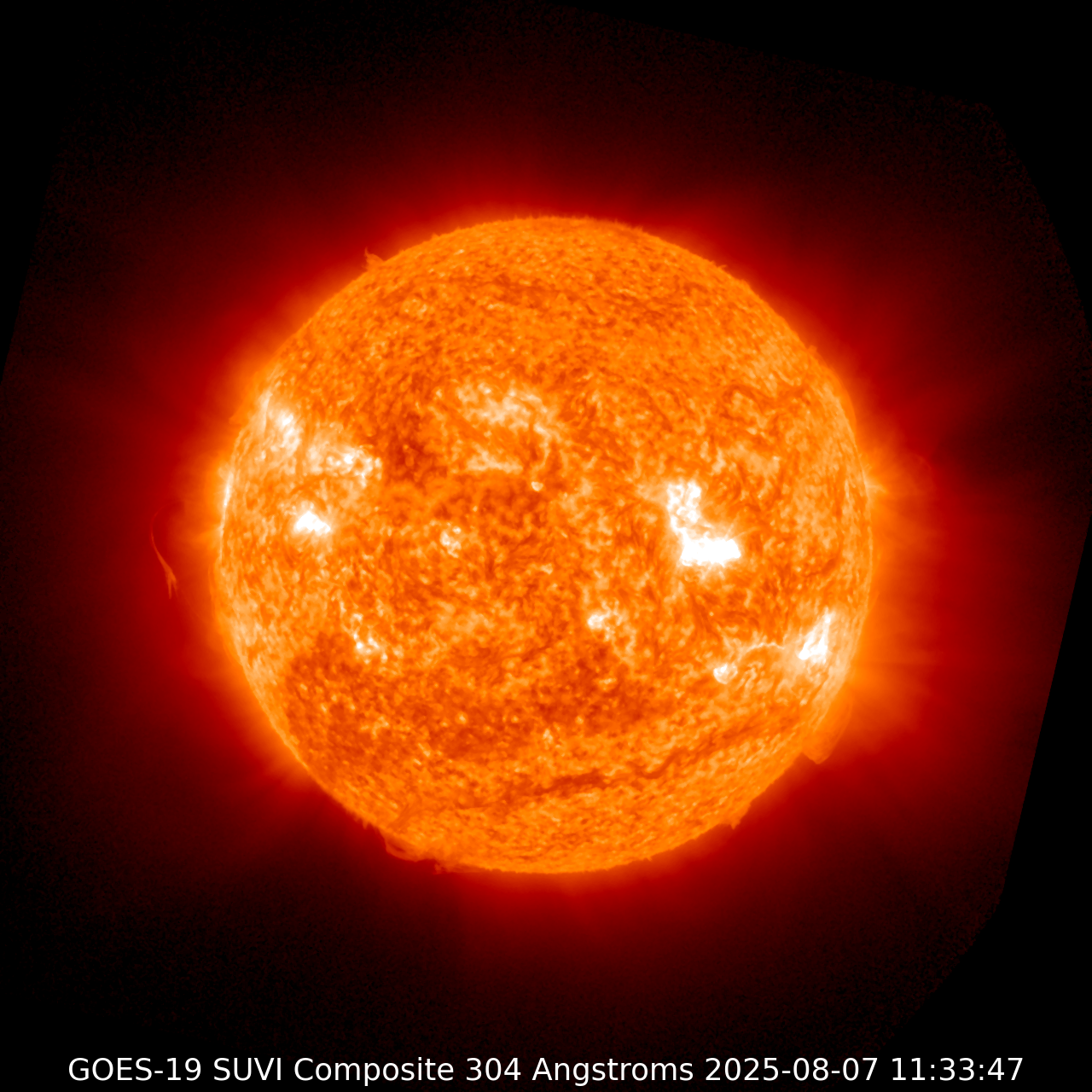
The Sun is currently in a state of low-to-moderate activity with five active regions observed across the disk. X-ray flux remains quiet, dominated by low-level C-class flare potential. The planetary K-index is holding steady at 2.0, indicating a tranquil magnetosphere.
The F10.7 radio flux at 122 sfu is the key indicator, reflecting a moderate level of solar activity that supports stable radio propagation for satellite and high-frequency communication operators.
Geomagnetic activity is expected to trend briefly toward unsettled levels with a peak Kp of 3.67 occurring within the next few hours. Conditions will settle back to quiet levels by the latter half of the 24-hour period.
Aurora visibility is not expected at mid-latitudes. Observers in high-latitude regions may see minimal, quiet-time auroral activity consistent with a Kp of 3-4.
| Region | Location | Class | Flares C/M/X |
|---|---|---|---|
| AR4469 | S16E20 | Bxo/B | 0/0/0 |
| AR4463 | N17W68 | Hsx/A | 0/0/0 |
| AR4464 | S14W70 | Hsx/A | 1/0/0 |
| AR4465 | N08W24 | Dai/BG | 1/0/0 |
| AR4468 | N11E25 | Bxo/B | 0/0/0 |
Monitor the M-class flare probability, which stands at 40%, for any sudden, impulsive energetic events from the current active regions.