Blog

  • Solar Watch — April 22, 2026 | 06:00 UTC

    ☀ HELIOS SOLAR WATCH · 2026-04-22 11:31 UTC
    Solar activity remains low with quiet geomagnetic conditions expected
    QUIET

    Active Regions
    4
    X-Ray
    A/B (quiet)

    Current solar activity is quiet with stable geomagnetic conditions holding at Kp 0.7. Solar output remains within expected ranges for this phase of the cycle with no significant space weather disturbances currently detected.

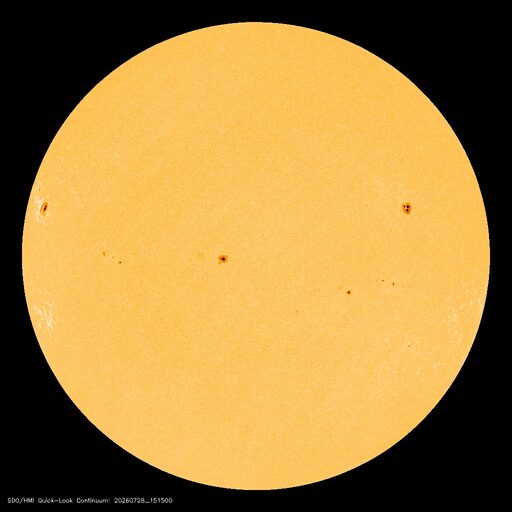
    HMI Continuum Intensity

    HMI Continuum · Visible Light

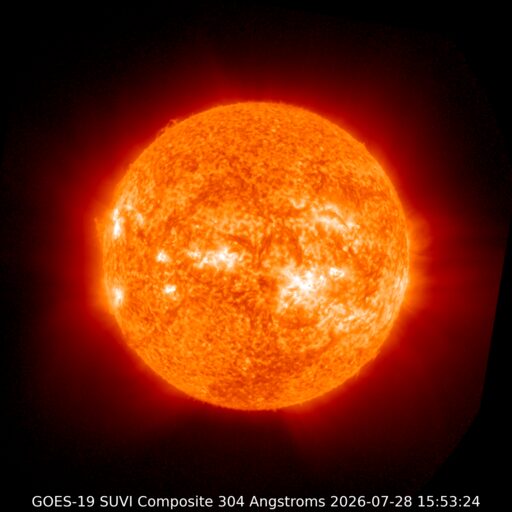
    SUVI 304 — Extreme UV

    SUVI 304Å · Extreme Ultraviolet

    R0
    Radio Blackouts
    24h max: R0

    S0
    Solar Radiation
    24h max: S0

    G0
    Geomagnetic Storm
    24h max: G0

    Planetary Kp-Index
    0.7
    0–9 scale · ≥5 = geomagnetic storm

    F10.7 Solar Flux
    121.0
    sfu · >150 = high activity

    The sun is exhibiting low-level activity across four active regions, with the F10.7 flux holding steady at 121 sfu. X-ray flux remains in the A/B range, indicating no significant flare activity, and the global geomagnetic field remains undisturbed. This quiet state provides ideal conditions for satellite operations and radio communications.

    Key Metric

    The F10.7 flux of 121 sfu indicates a moderate level of solar radio emissions, which provides a consistent baseline for atmospheric density and ionospheric conditions.

    Geomagnetic conditions are expected to remain stable, with Kp levels hovering near 2.0 through the next 24 hours. There is a moderate probability of C-class flares, but major eruptive events are unlikely at this time.

    🌌 Aurora Outlook

    Aurora activity is expected to be minimal, limited to high-latitude regions. Observers at mid-latitudes should not expect visible displays given the current low Kp values.

    Region Location Class Flares C/M/X
    AR4422 N09W44 ?/B 0/0/0
    AR4421 S10E55 ?/B 0/0/0
    AR4420 N16E38 ?/BG 0/0/0
    AR4419 N15W51 ?/BG 0/0/0
    2026-04-22 05:03:09.480Space Weather Message Code: ALTEF3
    2026-04-21 16:51:46.397Space Weather Message Code: WARK04
    2026-04-21 13:41:49.383Space Weather Message Code: ALTEF3
    2026-04-21 05:45:40.253Space Weather Message Code: WARK04
    2026-04-21 05:44:46.137Space Weather Message Code: WARK05

    Monitor the magnetic complexity of AR4420 and AR4419; while currently quiet, their Beta-Gamma classifications possess the potential for isolated flare development.

  • Solar Watch — April 22, 2026 | 06:00 UTC

    ☀ HELIOS SOLAR WATCH · 2026-04-22 11:29 UTC
    Solar activity remains low with quiet geomagnetic conditions expected
    QUIET

    Active Regions
    10
    X-Ray
    A/B (quiet)

    The Sun is currently in a period of low geomagnetic activity, with the planetary K-index hovering at 0.7. Space weather remains stable, and no significant solar eruptions are occurring.

    HMI Continuum Intensity

    HMI Continuum · Visible Light

    SUVI 304 — Extreme UV

    SUVI 304Å · Extreme Ultraviolet

    R0
    Radio Blackouts
    24h max: R0

    S0
    Solar Radiation
    24h max: S0

    G0
    Geomagnetic Storm
    24h max: G0

    Planetary Kp-Index
    0.7
    0–9 scale · ≥5 = geomagnetic storm

    F10.7 Solar Flux
    121.0
    sfu · >150 = high activity

    Current observations show an F10.7 solar flux of 121.0 sfu, indicative of moderate solar background levels. Geomagnetic field activity is at baseline levels (G0), and X-ray flux remains within the A/B-class range, indicating minimal flare activity. Four active regions are currently visible on the solar disk, but they are not producing significant space weather impacts at this time.

    Key Metric

    The current Kp-index of 0.7 confirms a very stable geomagnetic environment, meaning there is no current risk of disruption to power grids, satellite operations, or radio communications.

    Geomagnetic conditions are expected to remain quiet over the next 24 hours, with the K-index predicted to fluctuate between 2.0 and 2.33. No significant solar radiation storms or radio blackouts are anticipated as solar flare probabilities remain low.

    🌌 Aurora Outlook

    Aurora visibility is not expected at mid-latitudes due to the low geomagnetic indices. Observers in high-latitude regions may see standard, quiet-time auroral activity.

    Region Location Class Flares C/M/X
    AR4422 N09W44 ?/B 0/0/0
    AR4421 S10E55 ?/B 0/0/0
    AR4420 N16E38 ?/BG 0/0/0
    AR4419 N15W51 ?/BG 0/0/0
    AR4415 S18W99 ?/A 0/0/0
    AR4414 N15W0* ?/None 0/0/0
    2026-04-22 05:03:09.480Space Weather Message Code: ALTEF3
    2026-04-21 16:51:46.397Space Weather Message Code: WARK04
    2026-04-21 13:41:49.383Space Weather Message Code: ALTEF3
    2026-04-21 05:45:40.253Space Weather Message Code: WARK04
    2026-04-21 05:44:46.137Space Weather Message Code: WARK05

    Monitor active region AR4420, which maintains a beta-gamma magnetic classification and bears watching for any potential increase in M-class flare production.

  • Solar Watch — April 22, 2026 | 06:00 UTC

    ☀ HELIOS SOLAR WATCH · 2026-04-22 11:25 UTC
    Solar activity remains low with quiet geomagnetic conditions
    QUIET

    Active Regions
    10
    X-Ray
    A/B (quiet)

    Geomagnetic conditions are currently quiet, with the planetary K-index holding at 0.7. Solar activity is stable, and no significant space weather disturbances are expected in the near term.

    HMI Continuum Intensity

    HMI Continuum · Visible Light

    SUVI 304 — Extreme UV

    SUVI 304Å · Extreme Ultraviolet

    R0
    Radio Blackouts
    24h max: R0

    S0
    Solar Radiation
    24h max: S0

    G0
    Geomagnetic Storm
    24h max: G0

    Planetary Kp-Index
    0.7
    0–9 scale · ≥5 = geomagnetic storm

    F10.7 Solar Flux
    121.0
    sfu · >150 = high activity

    The sun is currently in a state of low-level activity, with a solar radio flux of 121 sfu and primarily B-class background X-ray levels. There are four active regions on the disk, but their magnetic configurations currently show little potential for major flaring. Overall, the magnetosphere remains undisturbed and stable.

    Key Metric

    The F10.7 flux of 121 sfu indicates moderate solar cycle activity, which sustains ionospheric conditions conducive to high-frequency radio propagation without the interference of storm-level fluctuations.

    Conditions are expected to remain quiet over the next 24 hours, with Kp levels forecasted to stay below 2.5. No significant solar radiation storms or radio blackouts are anticipated as solar flare probabilities remain low.

    🌌 Aurora Outlook

    Aurora visibility is not expected at mid-latitudes during this period. Observers in high-latitude regions may see only typical, faint background activity.

    Region Location Class Flares C/M/X
    AR4422 N09W44 ?/B 0/0/0
    AR4421 S10E55 ?/B 0/0/0
    AR4420 N16E38 ?/BG 0/0/0
    AR4419 N15W51 ?/BG 0/0/0
    AR4415 S18W99 ?/A 0/0/0
    AR4414 N15W0* ?/None 0/0/0
    2026-04-22 05:03:09.480Space Weather Message Code: ALTEF3
    2026-04-21 16:51:46.397Space Weather Message Code: WARK04
    2026-04-21 13:41:49.383Space Weather Message Code: ALTEF3
    2026-04-21 05:45:40.253Space Weather Message Code: WARK04
    2026-04-21 05:44:46.137Space Weather Message Code: WARK05

    Monitor the magnetic evolution of active regions AR4420 and AR4419 for any rapid flux emergence that could heighten flare potential.

  • Solar Watch — April 22, 2026 | 06:00 UTC

    ☀ HELIOS SOLAR WATCH · 2026-04-22 11:17 UTC
    Quiet geomagnetic conditions persist with moderate solar flux levels
    QUIET

    Active Regions
    4
    4 active regions
    X-Ray
    A/B (quiet)

    Solar activity remains at baseline levels with no significant geomagnetic disturbances observed. Current conditions are characterized by a quiet magnetosphere and stable solar flux.

    HMI Continuum Intensity

    HMI Continuum · Visible Light

    SUVI 304 — Extreme UV

    SUVI 304Å · Extreme Ultraviolet

    R0
    Radio Blackouts
    24h max: R0

    S0
    Solar Radiation
    24h max: S0

    G0
    Geomagnetic Storm
    24h max: G0

    Planetary Kp-Index
    0.7
    0–9 scale · ≥5 = geomagnetic storm

    F10.7 Solar Flux
    121.0
    sfu · >150 = high activity

    The Earth’s geomagnetic field is currently quiet with a Kp-index of 0.7. The 10.7cm radio flux is at 121 sfu, indicating moderate solar activity, though X-ray output remains in the background A/B range. Four active regions are currently visible on the solar disk, but none are displaying complex magnetic configurations likely to produce immediate eruptive events.

    Key Metric

    The current Kp-index of 0.7 confirms a very stable geomagnetic environment, which indicates minimal impact on terrestrial radio communications or navigation systems.

    Geomagnetic conditions are expected to remain quiet with Kp levels hovering around 2.0 throughout the next 24 hours. No significant space weather impacts are anticipated for satellite operations or power grids.

    🌌 Aurora Outlook

    Aurora activity is currently restricted to high latitudes. Observers at mid-latitudes should not expect any visible auroral displays under these conditions.

    Region Location Class Flares C/M/X
    AR4422 N09W44 ?/B 0/0/0
    AR4421 S10E55 ?/B 0/0/0
    AR4420 N16E38 ?/BG 0/0/0
    AR4419 N15W51 ?/BG 0/0/0
    AR4422 N09W30 ?/B 0/0/0
    AR4420 N16E52 ?/BG 0/0/0
    2026-04-22 05:03:09.480Space Weather Message Code: ALTEF3
    2026-04-21 16:51:46.397Space Weather Message Code: WARK04
    2026-04-21 13:41:49.383Space Weather Message Code: ALTEF3
    2026-04-21 05:45:40.253Space Weather Message Code: WARK04
    2026-04-21 05:44:46.137Space Weather Message Code: WARK05

    Monitor the magnetic complexity of AR4420 and AR4419; while currently stable, any sudden increase in their magnetic classification could elevate the probability of solar flares.

  • Solar Watch — April 22, 2026 | 06:00 UTC

    ☀ HELIOS SOLAR WATCH · 2026-04-22 11:12 UTC
    Solar activity remains low with quiet geomagnetic conditions
    QUIET

    SSN
    ?
    X-Ray
    A/B (quiet)

    Solar activity is currently stable and quiet, with no geomagnetic storming observed or expected. Planetary Kp-indices remain low, reflecting a calm environment in near-Earth space.

    HMI Continuum Intensity

    HMI Continuum · Visible Light

    SUVI 304 — Extreme UV

    SUVI 304Å · Extreme Ultraviolet

    R0
    Radio Blackouts
    24h max: R0

    S0
    Solar Radiation
    24h max: S0

    G0
    Geomagnetic Storm
    24h max: G0

    Planetary Kp-Index
    0.7
    0–9 scale · ≥5 = geomagnetic storm

    F10.7 Solar Flux
    121.0
    sfu · >150 = high activity

    The Sun is currently in a quiet state, with X-ray flux levels in the A/B-class range and no significant eruptive events. The F10.7 solar radio flux is holding steady at 121 sfu, indicating moderate solar background activity. Geomagnetic conditions are stable with a Kp-index of 0.7, well below any threshold for terrestrial impact.

    Key Metric

    The Kp-index of 0.7 confirms that the Earth’s magnetosphere is undisturbed and currently experiencing very stable conditions.

    Geomagnetic conditions are expected to remain quiet over the next 24 hours, with Kp levels forecast to hover between 2.0 and 2.33. We anticipate minor, sporadic C-class flaring as the current active regions transit the disk, but no significant space weather disturbances are projected.

    🌌 Aurora Outlook

    Aurora visibility is restricted to high-latitude regions, as the current low Kp-index provides no support for mid-latitude displays. Observers below 60 degrees latitude should not expect visible activity.

    Region Location Class Flares C/M/X
    AR4422 N09W44 ?/B 0/0/0
    AR4421 S10E55 ?/B 0/0/0
    AR4420 N16E38 ?/BG 0/0/0
    AR4419 N15W51 ?/BG 0/0/0
    AR4422 N09W30 ?/B 0/0/0
    AR4421 S09E72 ?/B 0/0/0
    2026-04-22 05:03:09.480Space Weather Message Code: ALTEF3
    2026-04-21 16:51:46.397Space Weather Message Code: WARK04
    2026-04-21 13:41:49.383Space Weather Message Code: ALTEF3
    2026-04-21 05:45:40.253Space Weather Message Code: WARK04
    2026-04-21 05:44:46.137Space Weather Message Code: WARK05

    Monitor the magnetic complexity of active region AR4420, which maintains a BG magnetic classification, for any signs of sudden flux increase or flare potential.

  • Solar Watch — April 22, 2026 | 06:00 UTC

    ☀ HELIOS SOLAR WATCH · 2026-04-22 11:10 UTC
    Solar activity remains low with quiet geomagnetic conditions
    QUIET

    SSN
    ?
    X-Ray
    ?

    Current solar conditions are quiet, with the geomagnetic field remaining undisturbed. The solar environment is stable, characterized by low background flare activity and an F10.7 flux value of 121 sfu.

    HMI Continuum Intensity

    HMI Continuum · Visible Light

    SUVI 304 — Extreme UV

    SUVI 304Å · Extreme Ultraviolet

    R0
    Radio Blackouts
    24h max: R0

    S0
    Solar Radiation
    24h max: S0

    G0
    Geomagnetic Storm
    24h max: G0

    Planetary Kp-Index
    0.7
    0–9 scale · ≥5 = geomagnetic storm

    F10.7 Solar Flux
    121.0
    sfu · >150 = high activity

    The planetary K-index is holding steady at 0.7, indicating a very stable geomagnetic environment. There are no active solar storms, and radio and radiation flux levels remain well within normal background parameters. Several active regions are present on the solar disk, but they currently lack the complex magnetic configuration required to produce significant eruptive events.

    Key Metric

    The current Kp-index of 0.7 confirms a stable geomagnetic field, ensuring no immediate impact on satellite operations or power grids.

    Geomagnetic activity is expected to remain low over the next 24 hours, with the Kp index likely to fluctuate between 2.0 and 2.33. No significant space weather disturbances are anticipated for Earth’s orbital environment during this period.

    🌌 Aurora Outlook

    Aurora activity will be confined to the highest latitudes, primarily near the poles. Mid-latitude observers are unlikely to see any visible auroral displays under these conditions.

    Region Location Class Flares C/M/X
    AR4422 N09W44 ?/B 0/0/0
    AR4421 S10E55 ?/B 0/0/0
    AR4420 N16E38 ?/BG 0/0/0
    AR4419 N15W51 ?/BG 0/0/0
    AR4420 N16E52 ?/BG 0/0/0
    AR4421 S09E72 ?/B 0/0/0
    2026-04-22 05:03:09.480Space Weather Message Code: ALTEF3
    2026-04-21 16:51:46.397Space Weather Message Code: WARK04
    2026-04-21 13:41:49.383Space Weather Message Code: ALTEF3
    2026-04-21 05:45:40.253Space Weather Message Code: WARK04
    2026-04-21 05:44:46.137Space Weather Message Code: WARK05

    Monitor the magnetic complexity of active regions AR4420 and AR4419 for any rapid development, as these are the most likely candidates for M-class flare production.

  • Solar Watch — April 22, 2026 | 06:00 UTC

    ☀ HELIOS SOLAR WATCH · 2026-04-22 10:46 UTC
    Solar activity remains stable with quiet geomagnetic conditions

    QUIET

    Geomagnetic conditions are currently quiet, with a planetary K-index of 0.7. Solar activity is characterized by moderate background levels, reflecting a steady, non-eruptive state.

    Current Solar Disk — HMI Continuum Intensity

    HMI Continuum Intensity · Stanford Solar Observatory / NASA SDO
    R0
    Radio Blackouts
    24h max: R0

    S0
    Solar Radiation
    24h max: S0

    G0
    Geomagnetic Storm
    24h max: G0

    Planetary Kp-Index
    0.7
    0–9 scale · ≥5 = geomagnetic storm

    F10.7 Solar Flux
    121.0
    sfu · >150 = high activity

    The sun is currently quiet, with the F10.7 solar flux holding steady at 121 sfu, indicating a moderate level of solar activity. The geomagnetic field remains settled with no active storm warnings in effect. Several active regions are present on the disk, but they show minimal magnetic complexity, keeping flare probabilities relatively low.

    Key Metric

    The current Kp index of 0.7 confirms a stable geomagnetic environment, signaling no impact on satellite operations or power grid stability at this time.

    Expect geomagnetic conditions to remain quiet, with Kp indices hovering between 2.0 and 2.33 throughout the next 24 hours. No significant space weather disturbances are anticipated, and radio propagation should remain within standard operational parameters.

    🌌 Aurora Outlook

    Aurora visibility is not expected at mid-latitudes given the current Kp index. Activity will be restricted to high-latitude regions, where only minor, localized auroral displays are possible.

    Region Location Class Flares C/M/X
    AR4422 N09W44 ?/B 0/0/0
    AR4419 N15W51 ?/BG 0/0/0
    AR4420 N16E38 ?/BG 0/0/0
    AR4421 S10E55 ?/B 0/0/0
    AR4420 N16E52 ?/BG 0/0/0
    AR4421 S09E72 ?/B 0/0/0
    2026-04-22 05:03:09.480Space Weather Message Code: ALTEF3
    2026-04-21 16:51:46.397Space Weather Message Code: WARK04
    2026-04-21 13:41:49.383Space Weather Message Code: ALTEF3
    2026-04-21 05:45:40.253Space Weather Message Code: WARK04
    2026-04-21 05:44:46.137Space Weather Message Code: WARK05

    Monitor the development of AR4420 as it rotates further into view, as its Beta-Gamma magnetic classification makes it the most likely candidate for minor flare production.

  • Solar Watch — April 22, 2026 | 06:00 UTC

    ☀ HELIOS SOLAR WATCH · 2026-04-22 10:41 UTC
    Quiet geomagnetic conditions persist with moderate solar flux levels

    QUIET

    Solar activity remains at baseline levels with no significant geomagnetic disturbance. The planetary K-index is currently 0.7, indicating a very stable magnetosphere.

    Current Solar Disk — HMI Continuum Intensity

    HMI Continuum Intensity · Stanford Solar Observatory / NASA SDO
    R0
    Radio Blackouts
    24h max: R0

    S0
    Solar Radiation
    24h max: S0

    G0
    Geomagnetic Storm
    24h max: G0

    Planetary Kp-Index
    0.7
    0–9 scale · ≥5 = geomagnetic storm

    F10.7 Solar Flux
    121.0
    sfu · >150 = high activity

    The sun is currently in a quiet state regarding geomagnetic impact, with no active storm warnings in effect. Solar flux (F10.7) sits at 121.0 sfu, which reflects a moderate level of solar activity consistent with the ongoing solar cycle. Multiple sunspot regions are present on the disk, but they currently lack the magnetic complexity to produce significant flare activity.

    Key Metric

    The current Kp-index of 0.7 is the most important metric as it confirms the absence of geomagnetic storming and a peaceful space weather environment.

    Geomagnetic conditions are expected to remain quiet for the next 24 hours. The K-index will likely fluctuate between 2.0 and 2.33, indicating no significant space weather impacts on Earth’s systems.

    🌌 Aurora Outlook

    Aurora activity is currently restricted to high latitudes. Observers at mid-latitudes (40-60°N) are unlikely to see any displays under these stable conditions.

    Region Location Class Flares C/M/X
    AR4422 N09W44 ?/B 0/0/0
    AR4421 S10E55 ?/B 0/0/0
    AR4420 N16E38 ?/BG 0/0/0
    AR4419 N15W51 ?/BG 0/0/0
    AR4422 N09W30 ?/B 0/0/0
    AR4421 S09E72 ?/B 0/0/0
    2026-04-22 05:03:09.480Space Weather Message Code: ALTEF3
    2026-04-21 16:51:46.397Space Weather Message Code: WARK04
    2026-04-21 13:41:49.383Space Weather Message Code: ALTEF3
    2026-04-21 05:45:40.253Space Weather Message Code: WARK04
    2026-04-21 05:44:46.137Space Weather Message Code: WARK05

    Monitor the magnetic evolution of active region AR4420, as its current beta-gamma classification represents the highest potential for flare activity in the coming day.

  • Solar Watch — April 22, 2026 | 06:00 UTC

    Solar Watch — April 22, 2026 | 06:00 UTC

    ☀ HELIOS SOLAR WATCH · 2026-04-22 10:36 UTC
    Quiet Solar Conditions Persist with Low Geomagnetic Activity

    QUIET

    Solar activity remains at baseline levels with the Kp-index at 0.7. No significant geomagnetic or radiation storms are currently impacting Earth.

    Current Solar Disk — HMI Continuum Intensity

    HMI Continuum Intensity · Stanford Solar Observatory / NASA SDO
    R0
    Radio Blackouts
    24h max: R0

    S0
    Solar Radiation
    24h max: S0

    G0
    Geomagnetic Storm
    24h max: G0

    Planetary Kp-Index
    0.7
    0–9 scale · ≥5 = geomagnetic storm

    F10.7 Solar Flux
    121.0
    sfu · >150 = high activity

    The planetary Kp-index is at a quiet 0.7, indicating very stable geomagnetic conditions. The F10.7 solar radio flux is at a moderate 121.0 sfu, reflecting typical background activity for the current cycle. Several active regions are present on the disk, but their magnetic configurations currently pose only a low risk for significant solar flares.

    Key Metric

    The Kp-index of 0.7 confirms a stable geomagnetic field, suggesting no disruption to global power grids or satellite navigation systems.

    Geomagnetic conditions are expected to remain quiet, with the Kp-index oscillating between 2.0 and 2.33 throughout the next 24 hours. No significant space weather disturbances are anticipated for satellite or radio operators.

    🌌 Aurora Outlook

    Aurora activity will be confined to the high polar latitudes. Mid-latitude observers should not expect any visible auroral displays in the next 24 hours.

    Region Location Class Flares C/M/X
    AR4422 N09W44 ?/B 0/0/0
    AR4421 S10E55 ?/B 0/0/0
    AR4420 N16E38 ?/BG 0/0/0
    AR4419 N15W51 ?/BG 0/0/0
    AR4420 N16E52 ?/BG 0/0/0
    AR4421 S09E72 ?/B 0/0/0
    2026-04-22 05:03:09.480Space Weather Message Code: ALTEF3
    2026-04-21 16:51:46.397Space Weather Message Code: WARK04
    2026-04-21 13:41:49.383Space Weather Message Code: ALTEF3
    2026-04-21 05:45:40.253Space Weather Message Code: WARK04
    2026-04-21 05:44:46.137Space Weather Message Code: WARK05

    Monitor the magnetic complexity of AR4420, as its BG classification could evolve and increase the probability of C-class or M-class solar flares.

  • Solar Watch — April 22, 2026 | 06:00 UTC

    ☀ HELIOS SOLAR WATCH · 2026-04-22 10:26 UTC
    Solar activity remains quiet with stable geomagnetic conditions.

    QUIET

    Current solar conditions are quiet, with a stable planetary K-index of 0.7 and no significant geomagnetic disturbances. Solar activity is characterized by a moderate F10.7 flux of 121 sfu and steady background levels.

    R0
    Radio Blackouts
    24h max: RNone

    S0
    Solar Radiation
    24h max: SNone

    G0
    Geomagnetic Storm
    24h max: G0

    Planetary Kp-Index
    0.7
    0–9 scale · ≥5 = geomagnetic storm

    F10.7 Solar Flux
    121.0
    sfu · >150 = high activity

    The geomagnetic field is currently quiet, reflecting a period of low solar interaction with the Earth’s magnetosphere. Solar activity is punctuated by several active regions, though none are currently producing major flare events. With an F10.7 flux at 121 sfu, the solar atmosphere maintains a moderate, consistent output suitable for stable HF radio propagation.

    Key Metric

    The F10.7 flux value of 121 sfu is the key indicator, confirming moderate solar cycle progress that currently supports stable, reliable radio frequency usage globally.

    Geomagnetic conditions are expected to remain quiet for the next 24 hours, with Kp values projected to hover between 2.0 and 2.3. No significant solar radiation or radio blackouts are anticipated as current flare probabilities remain well within nominal ranges.

    🌌 Aurora Outlook

    Aurora visibility is restricted to high-latitude regions, particularly near the poles. No displays are expected at mid-latitudes during this period due to the lack of significant geomagnetic energy input.

    Region Location Class Flares C/M/X
    AR4422 N09W44 ?/B 0/0/0
    AR4421 S10E55 ?/B 0/0/0
    AR4420 N16E38 ?/BG 0/0/0
    AR4419 N15W51 ?/BG 0/0/0
    AR4420 N16E52 ?/BG 0/0/0
    AR4421 S09E72 ?/B 0/0/0
    2026-04-22 05:03:09.480Space Weather Message Code: ALTEF3
    2026-04-21 16:51:46.397Space Weather Message Code: WARK04
    2026-04-21 13:41:49.383Space Weather Message Code: ALTEF3
    2026-04-21 05:45:40.253Space Weather Message Code: WARK04
    2026-04-21 05:44:46.137Space Weather Message Code: WARK05

    Monitor active regions AR4419 and AR4420 for any evolution in magnetic complexity, as their BG classifications suggest potential for C-class or M-class flaring activity.