M @ 20:17 UTC · M @ 23:05 UTC · M @ 23:59 UTC · M @ 01:46 UTC · M @ 02:17 UTC
GEO: QUIET
4
A/B (quiet)
Solar activity is currently characterized by a high frequency of M-class flares from multiple active regions, while geomagnetic conditions remain quiet. Earth’s magnetosphere has not yet registered a significant response to this eruptive activity.
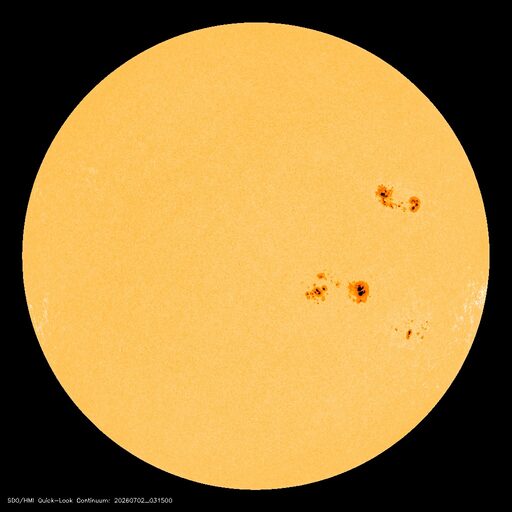
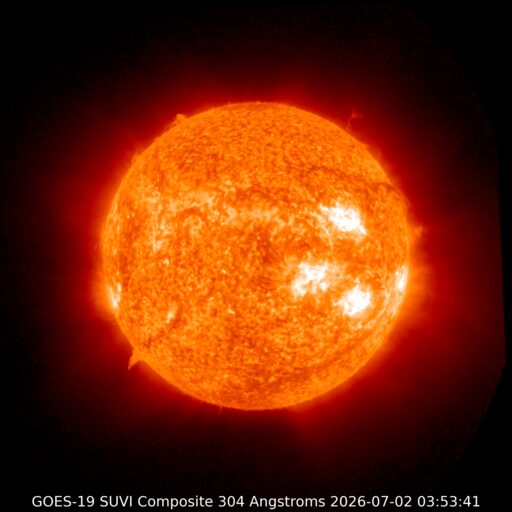
The solar disk remains highly productive, with 34 active regions reported and a steady cadence of M-class flares observed in the last 12 hours. Despite this high-energy flare activity, the planetary K-index has settled to a stable 2.0. The F10.7 flux index sits at 124.0 sfu, indicating a robust level of solar output typical of a high-activity phase.
The M-flare frequency is the primary indicator, as it highlights the sustained instability in the active regions which could lead to an Earth-directed eruption.
Geomagnetic conditions are expected to remain in the quiet range, with the Kp index likely hovering between 2.0 and 2.33. Flare activity will persist; there is a 60% probability of further M-class events and a 15% chance of an X-class flare as AR4479 and AR4478 remain magnetically complex.
Aurora activity is currently low and restricted to high-latitude regions. There is no significant geomagnetic storming expected, meaning mid-latitude observers are unlikely to witness displays in the next 24 hours.
| Region | Location | Class | Flares C/M/X |
|---|---|---|---|
| AR4480 | S16W43 | Csi/BG | 0/0/0 |
| AR4479 | N17W38 | Eki/BGD | 0/8/0 |
| AR4478 | S05W20 | Fki/BGD | 2/2/0 |
| AR4475 | S09W74 | Cri/B | 1/0/0 |
Monitor the X-ray flux for any impulsive X-class flares that could indicate a rapid Coronal Mass Ejection (CME) release.