GEO: QUIET
2
A/B (quiet)
Solar activity remains at low levels with no significant geomagnetic disturbances currently affecting Earth. The sun remains quiet with only minor C-class flare production observed.
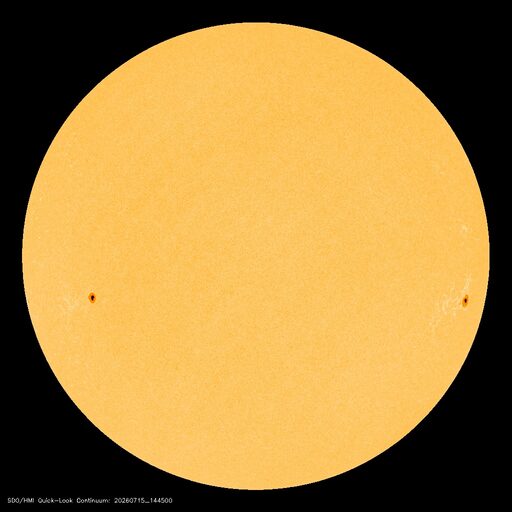
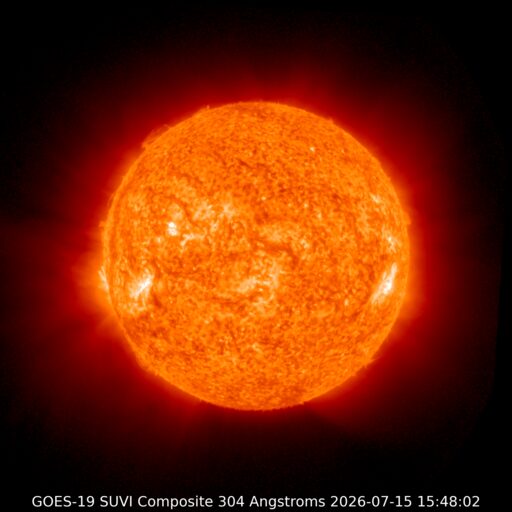
The planetary K-index is currently 2.7, indicating quiet geomagnetic conditions. Solar radio flux (F10.7) sits at 151.0 sfu, suggesting a stable, moderately active corona despite the lack of major flare activity. With five active regions currently on the disk, the environment remains monitored but stable.
The F10.7 flux value of 151.0 sfu is the primary metric, as it indicates a sustained, healthy level of solar output despite the current lack of high-energy flares.
Geomagnetic conditions are expected to remain quiet to unsettled over the next 24 hours, with Kp levels peaking near 3.0. No significant solar radiation storms or radio blackouts are anticipated at this time.
Aurora activity is expected to be limited to high-latitude regions. Observers at mid-latitudes (40-60°N) are unlikely to see significant displays under the current forecast.
| Region | Location | Class | Flares C/M/X |
|---|---|---|---|
| AR4482 | S09W69 | Cho/B | 0/0/0 |
| AR4489 | S08E45 | Cso/B | 1/0/0 |
Monitor the development of AR4489, which is currently the most active region on the disk, for any sudden increases in flare complexity.