GEO: QUIET
3
A/B (quiet)
Geomagnetic conditions are currently quiet with a planetary K-index of 1.3. Solar activity is stable, reflecting a typical background state for the current cycle.
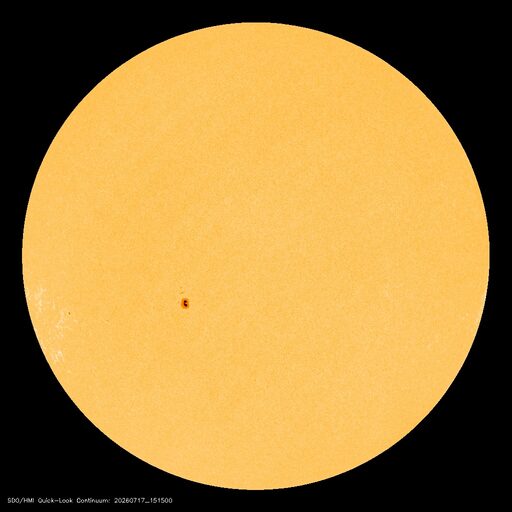
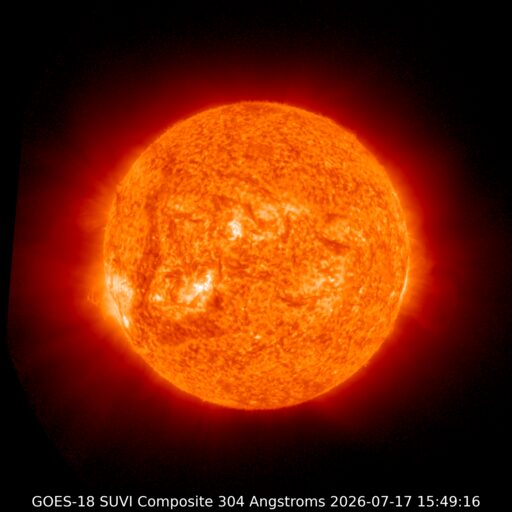
The Earth’s magnetic field is undisturbed, with the Kp-index holding steady between 0.7 and 1.3 over the last 24 hours. Solar X-ray flux is at background A/B levels, indicating no significant eruptive activity from the six active regions currently on the Earth-facing disk. The F10.7 radio flux of 140 sfu confirms a moderate level of solar disk activity, well within expected nominal ranges.
The current Kp-index of 1.3 confirms a stable magnetosphere, meaning no immediate impacts for satellite operators or power grid stability.
Conditions are expected to remain quiet for the next 24 hours, with the Kp-index unlikely to exceed 2.33. No significant geomagnetic disturbances or solar radiation storms are anticipated during this period.
Aurora visibility remains restricted to high polar latitudes. There is no expected impact for mid-latitude observers at this time.
| Region | Location | Class | Flares C/M/X |
|---|---|---|---|
| AR4489 | S08E17 | Cso/B | 0/0/0 |
| AR4491 | S11E50 | Hax/A | 0/0/0 |
| AR4490 | N15E03 | Bxo/B | 0/0/0 |
Monitor the development of Active Region AR4491 as it rotates toward the solar limb, as its complexity may influence flare probability.