GEO: QUIET
5
A/B (quiet)
The sun is currently in a period of relative calm with no significant geomagnetic storms or radio blackouts. Current solar flux levels remain low, indicating a subdued state of solar activity.
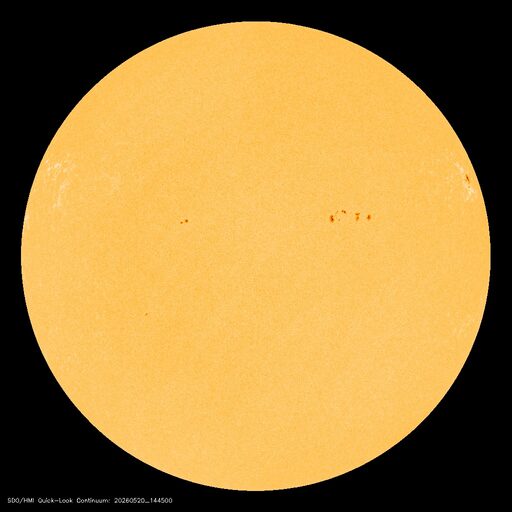
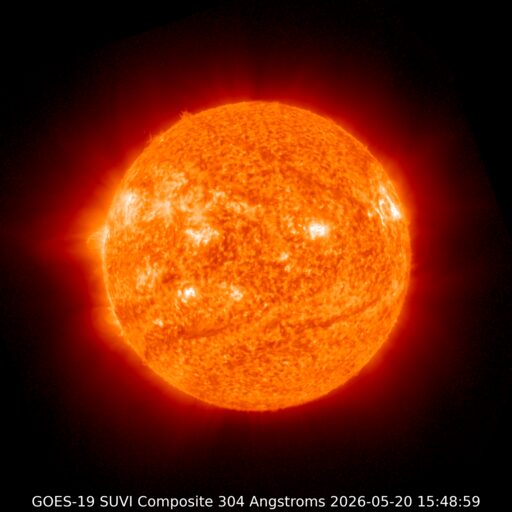
The planetary K-index sits at a stable 1.7, confirming quiet geomagnetic conditions across the globe. With an F10.7 flux of 98.0 sfu, ionizing radiation levels are at a baseline state. Seven active regions are present, but their current magnetic complexity remains low, minimizing the immediate risk of high-level X-ray flaring.
The F10.7 solar flux of 98.0 sfu indicates a low level of solar radio emissions, consistent with the currently quiet solar cycle environment.
Geomagnetic activity is expected to remain quiet, with Kp levels hovering around 2.0. No significant impulsive solar events or coronal mass ejections are anticipated in the next 24 hours.
Aurora visibility for mid-latitudes (40-60°N) is unlikely at this time. Observers should not expect any significant displays as the geomagnetic field remains undisturbed.
| Region | Location | Class | Flares C/M/X |
|---|---|---|---|
| AR4443 | S16E23 | Axx/A | 0/0/0 |
| AR4439 | N06E16 | Cao/B | 1/0/0 |
| AR4436 | N18W78 | Cso/B | 0/0/0 |
| AR4441 | N07W29 | Dao/B | 0/0/0 |
| AR4440 | N17E15 | Axx/A | 0/0/0 |
Monitor AR4439 as it rotates further onto the solar disk, as it currently holds the highest potential for minor C-class flare activity.